
For the Love of Water

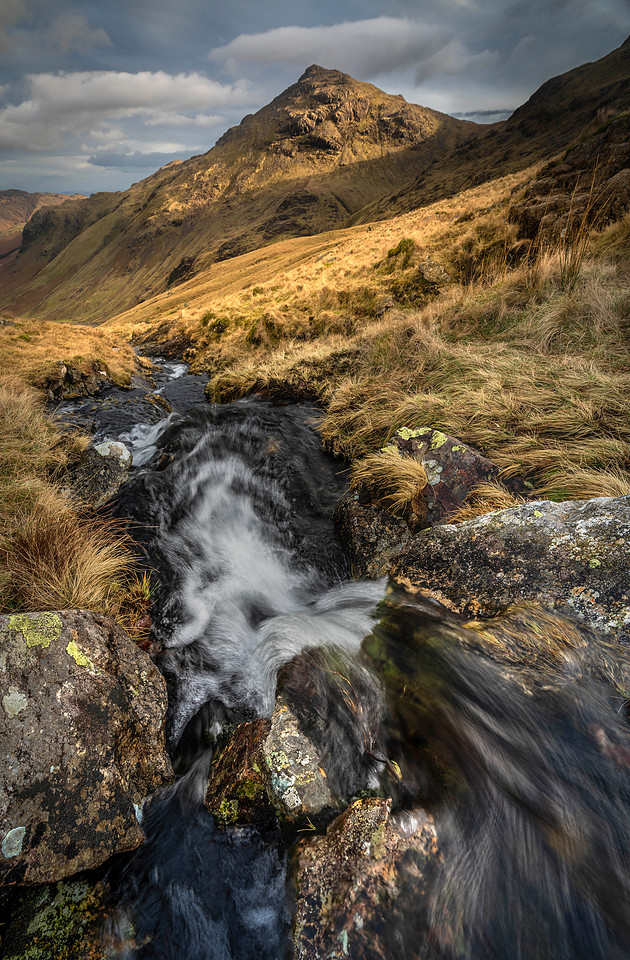
As a photographer I'm a real lover of fell top photography. I can often but found on a hill trying to piece together a beautiful mountain back drop with interesting and complimentary foreground. However from time to time I like to introduce other forms of foreground to mix up my images a little. No more so than water and in particular waterfalls. I'm not talking about shooting waterfalls in a stand alone context but in combination with a wider scene, to provide the interest in fore and mid ground if you will. Sadly we aren't inundated with this type of mountain backdrop/waterfall partnership in the Lakes, but they are out there and I'm always on the look out for the next one. In this blog I'm going to explain my approach to shooting these particular scenes, what I look for and how I ultimately capture the images.
What a View
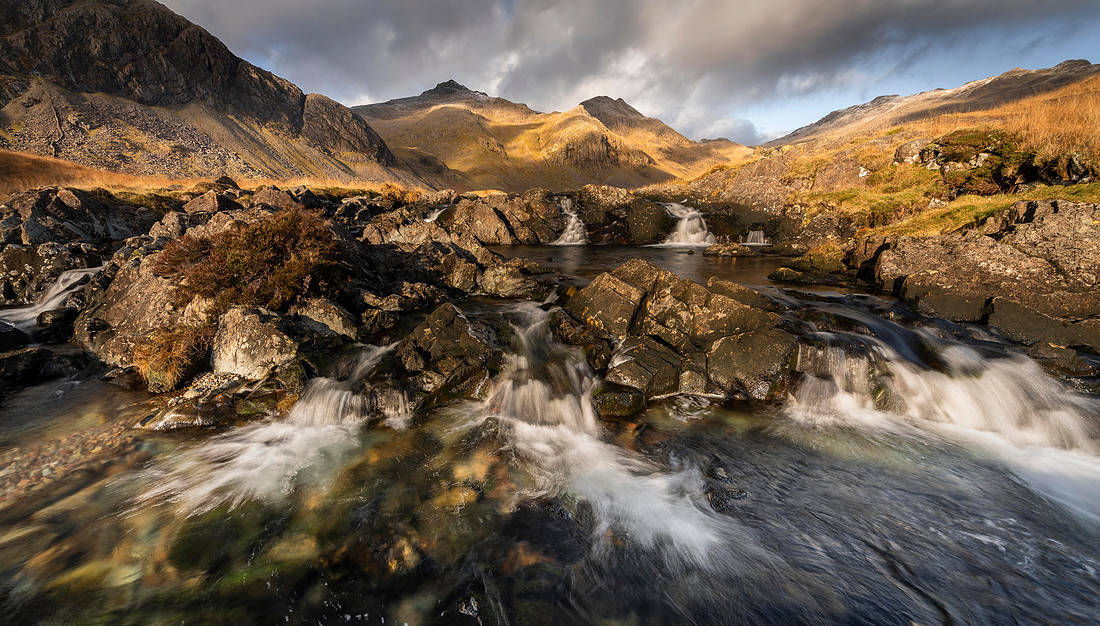
Completely obvious here, but we need a really strong back drop as a starting point. Usually the view is what gains my interest first and foremost, if you don't have this base criteria in the first place then its pretty much a none starter for me. I'm not a huge lover of shots of waterfalls on their own, unless they are particularly impressive falls. In my eyes it really needs to be in partnership with a wider vista. A waterfall alone doesn't hold my interest enough, I much prefer it as a supporting element of an overall scene, so this is why, for me the back drop is critical to the image. So I always try and locate a really strong prominent mountain to start the formation of my image.
Impressive backdrops are a key ingredient for me when introducing waterfalls into my images.

Foreground Interest
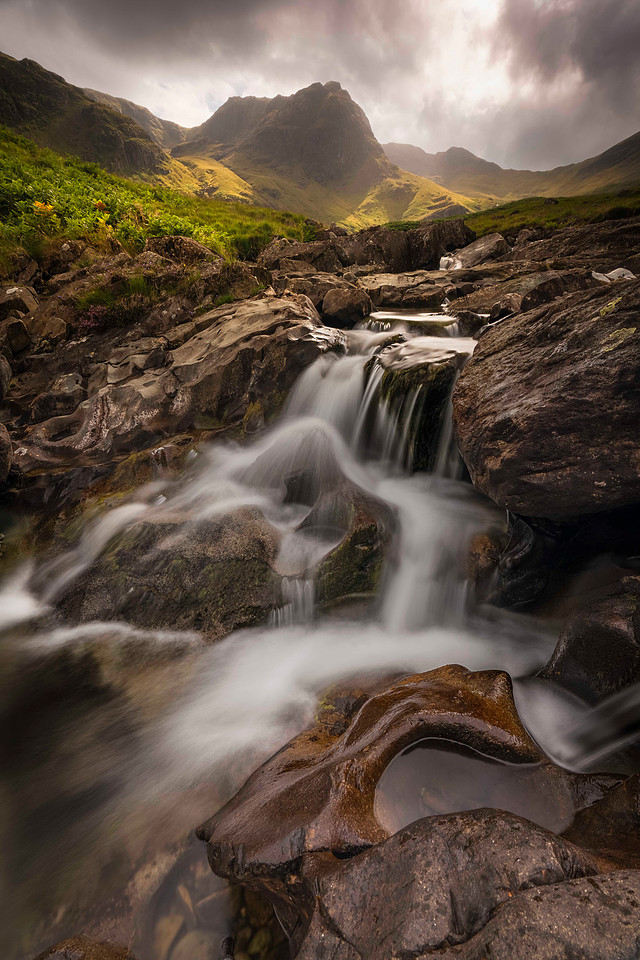
Interesting and compelling foreground is still order of the day when shooting the mountain/waterfall combination. I approach it as I would when shooting any scene, I try and find foreground that enhances and compliments the whole scene in front of me. Yes the flow of the water is essential, but adding other elements into the foreground can really add to the over all aesthetic. Interesting rocks and foliage can help to break up the scene and add little touches of interest. As always make sure these elements compliment the rest of the scene. Always have the mindset does it add to the image?
Adding elements into your foreground helps to add interest and depth.
Add Depth
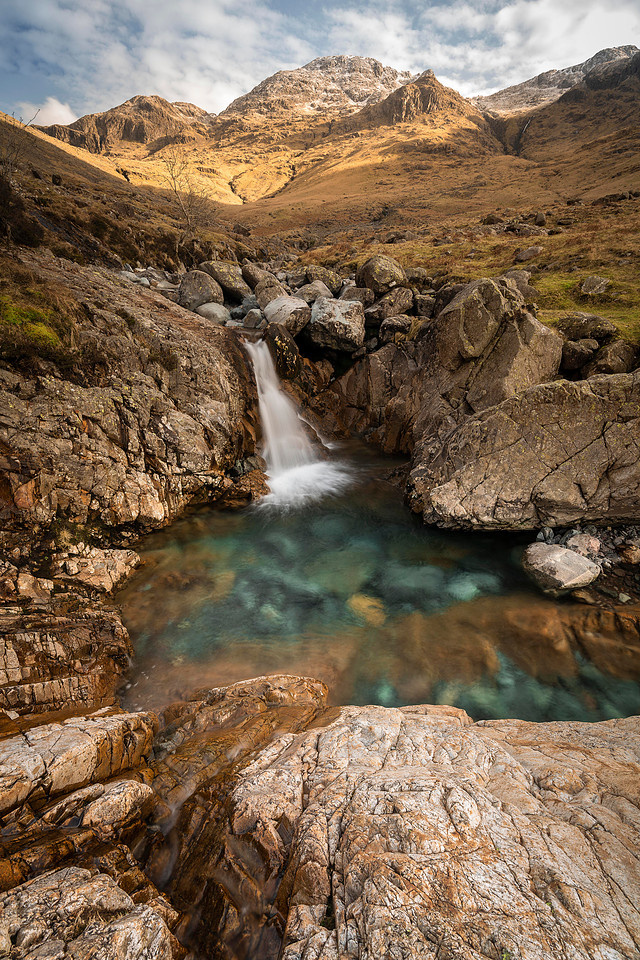
Depth is vital for creating an image the viewer can move through. So a long with your fore and background it is also imperative we incorporate a really strong mid ground to really bridge that gap and keep the journey through the image flowing. Using your rule of thirds as a bit of guide to help you combine all the parts, it's only a rough guide but it helps you to start visualising this when composing images. Following this should give you less one dimensional images and give the image depth from front to back. Don't be afraid to use really strong elements in fore, mid and background to help build your images.
Creating depth - Combining strong foreground, Mid ground and Back ground can really help to add depth into your images.
Get your Angles right
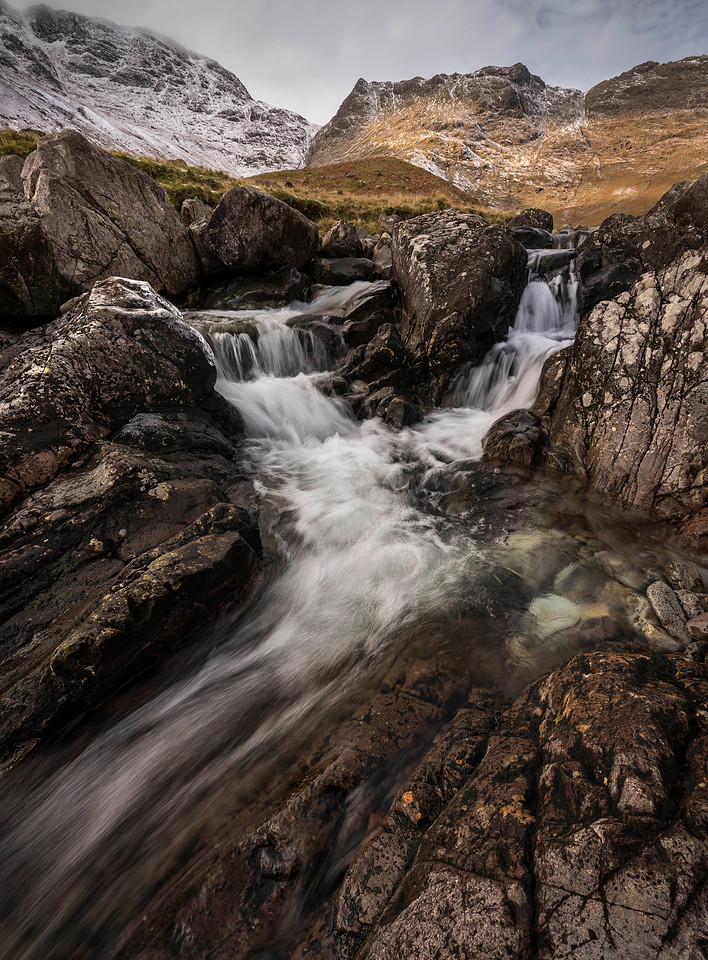
Getting the right angle is key when shooting waterfalls. We want to catch the flow of the water and to do this getting down low and closer to the water really helps, but not too much that we lose the layers. Its all about balance and don't be afraid to get nice and close to your foreground and experiment at different heights. Using a good old wide angle lens can help you achieve this, allowing you to create interesting angles and get closer to the action. Before you commit to your composition, just take that little bit of extra time to experiment with different angles and heights and fine tune the image.
Getting angles right to ensure the water flows through the scene. Getting close to subjects can really help to achieve this.
Go Portrait
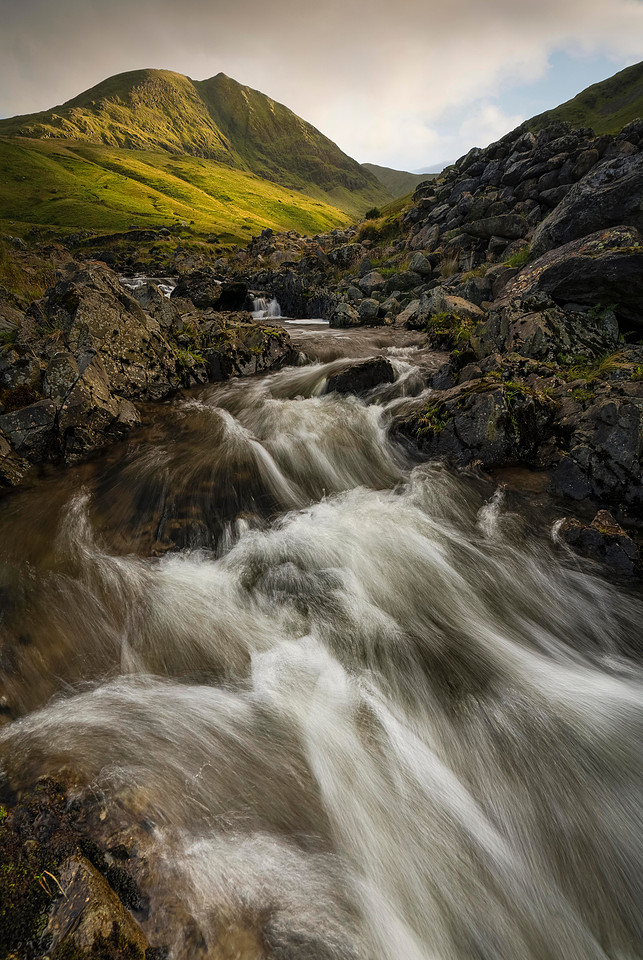
As you all probably know by now, I'm a huge lover of shooting in portrait orientation. I believe it works really well for waterfalls as it really helps to maximise the flow of the water. While it maximises in one area, portrait can also minimise distractions in the wider scene. Essentially we are trimming the fat and left with the prime cut. Getting the flow correct its probably the most important part on the image and can literally be the making and breaking of it for me. Portrait shots really do help to accentuate the water moving through image.
Shooting in portrait can really help to emphasis the flow of water in your images and make it the star of the show
Get in amongst it
Bring forth the wellies...I'm going in. I find getting in the water allows for more creative freedom when forming our compositions and we aren't just confined to the side of the beck and the restrictions this brings. I've often been found standing in the water or perched on a rock in a fast flowing beck but this affords me complete freedom to move and find the right angles to get the shots I want. Don't be afraid to potentially get wet. However please watch your camera equipment, as the two don't mix.
Getting into the water can help to maximise your composition and get the best angles to get the shots you want.
 Expose Yourself
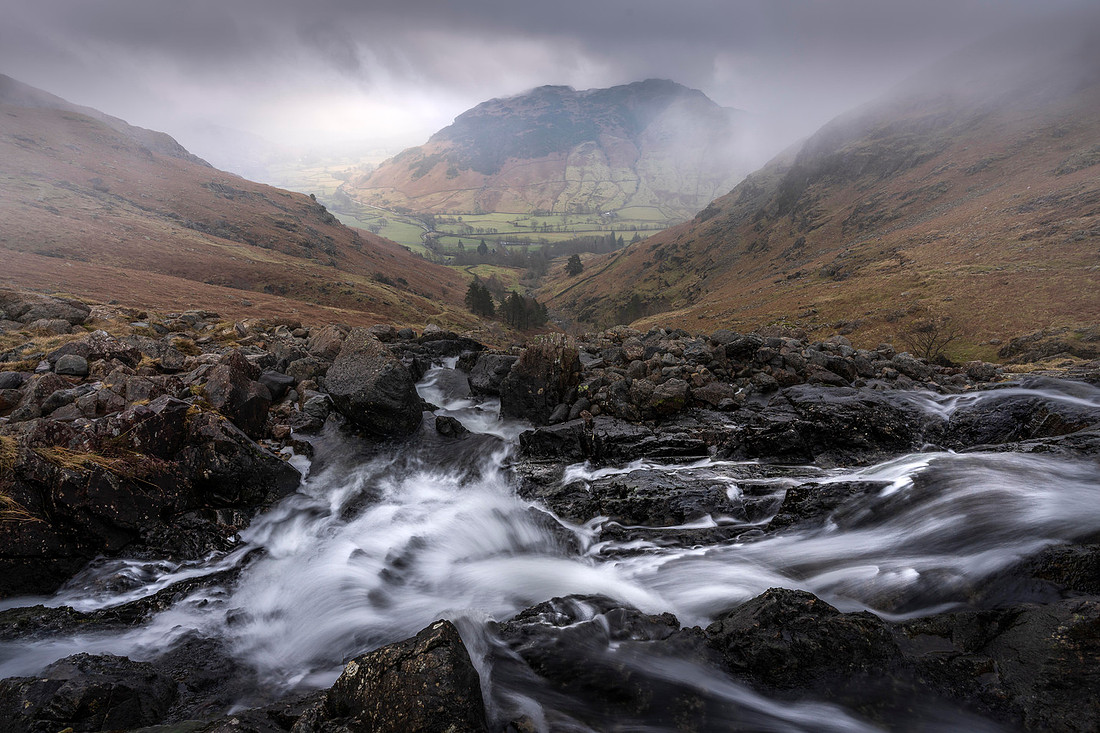
The right exposure is absolutely critical, too slow and the water is too silky and lacks detail, to fast stops the action dead and you don't get that wonderful sense of the flow and movement. So getting it at that sweet spot is vital. There is no magic formula for this but as a rule I try to be around 1/5 or 1/8 of a second. This keeps the all important flow and retains detail in the water. There are variable factors which can alter this ie light and how fast the water is flowing, so make sure your have a play around either side taking into account the conditions.
I like a shutter speed that is faster enough to retain detail but not too fast that you lose the flow of the water.
Great in All Weather
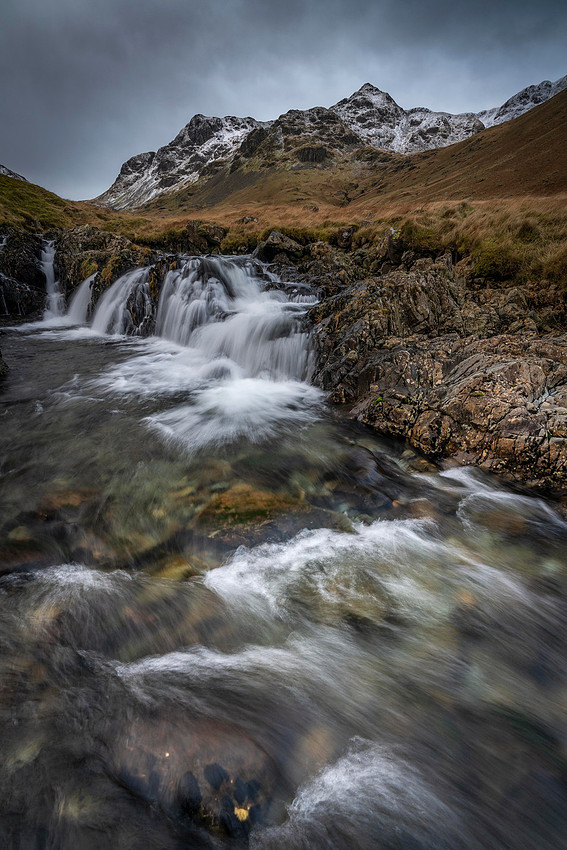
The beauty about waterfalls is you can shoot them in any weather conditions. In fact moody overcast days can be absolutely perfect for these types of shot. As the water brings so much interest to the overall scene, you don't have to worry or rely on other aspects which are often out of our control. Snow, rain and wind can really compliment and add really interest into our scenes. So don't be afraid to embrace the bad weather and get the rain jacket on.
Shooting in inclement conditions can make for some wonderfully atmospheric images.
Exploration is Key and Fun
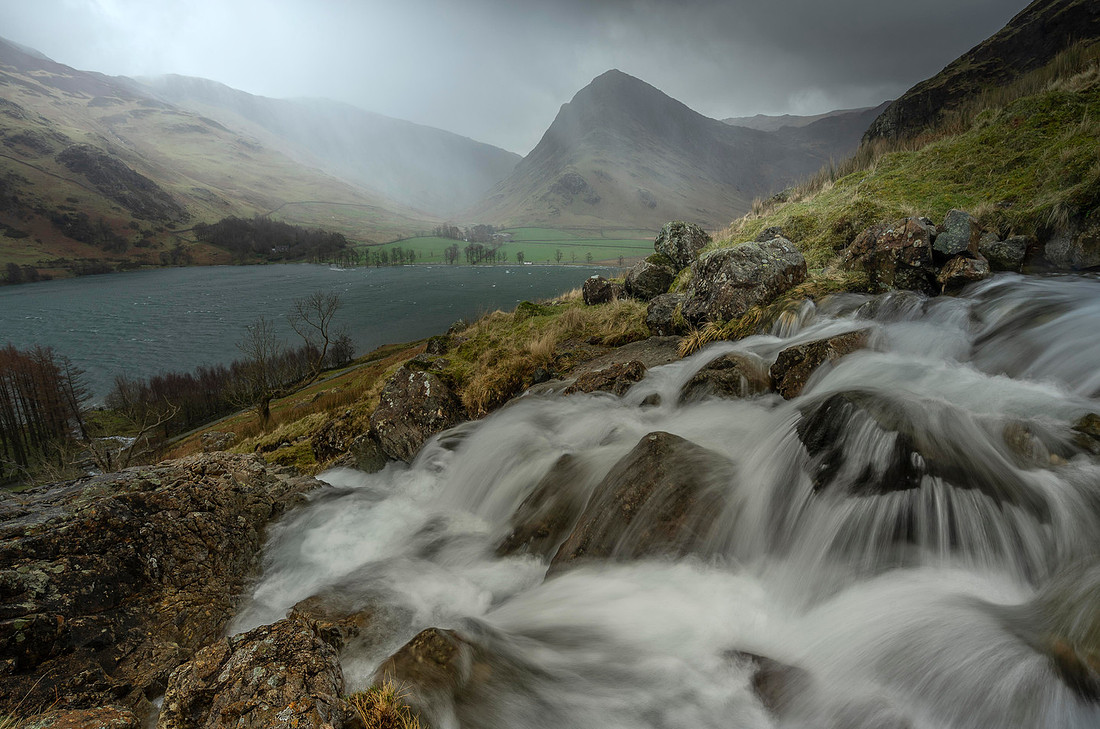
When there isn't an abundance of well known locations then you have to find them. I really enjoy this stage, yes it can be frustrating as some times the exploring comes to nothing, but its an excellent way of finding new and exciting locations. I pour over maps and google earth to get an idea of locations that may work and then take it from there. Its also good for our creativity as we don't have any previous preconceptions of shots already taken. It all helps to keep things fresh and interesting.
Exploring is great for finding original images
So thats my quick guide to photographing waterfalls as part of a wider scene. It is certainly nice to mix things up and using the water to form your foreground interest. It can also be a lot of fun as shooting long exposures can be really interesting as your never quite know what your going to get when you press that shutter button. Creatively its also enjoyable playing around with the wide angle lens and see what interesting compositions you can create getting nice and close to your subject. So next time your out give it a try and I'm sure you will have an enjoyable time.
Tim